



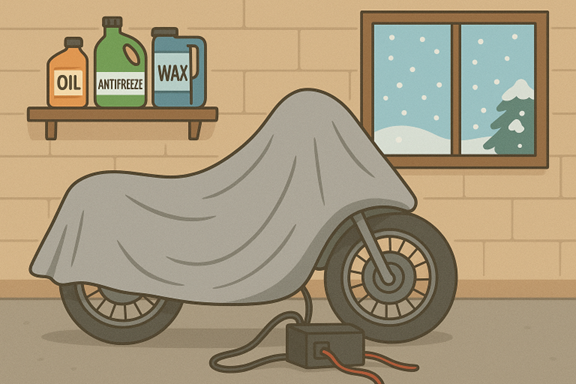
As riding season winds down—depending on your tolerance for cold fingers and frosty mornings—it’s time to think about winterizing your motorcycle.
There are thousands of tips out there, from the practical to the downright quirky (teaspoon of oil in the cylinders, anyone?).
But if you want to keep your bike in top shape for spring, here are my 9 must-do steps. Why 9? Because everyone does 10, and 11 is just too much work!
1. Stabilize the fuel or drain the tank.
Modern gasoline, especially the ethanol-blended stuff, doesn’t age well. Some folks swear by draining the tank and carb, but I’m not convinced you can ever get every drop out.
My method: fill the tank, add a quality fuel stabilizer, and run the engine for at least 15 minutes to circulate the treated fuel throughout the system. Top off the tank afterward to minimize air (and moisture) inside.
2. Change your oil.
Do this as close to your last ride as possible. If you’re a DIYer, consider changing the oil right after running the stabilized fuel through.
Fresh oil removes sludge and contaminants that could oxidize and cause damage during storage. Run the engine for a few minutes to distribute the new oil.
3. Prepare and Protect the Battery.
Most motorcycle batteries are lead-acid and should be kept under a constant charge to maintain their life. Be aware there is a difference between a battery tender and a tickle charger.
A battery tender is a specialized charger that has special circuits to prevent overcharging your battery. You can use a trickle charger but check the instructions carefully; many cannot be used on your battery for more than 30 minutes each day.
If your motorcycle is stored where freezing temperatures will likely occur, consider removing the battery and placing it in a warm dry place. You will still need to keep it charged but the cold will have less effect on the life of the battery.
4. Check your anti-freeze.
Yes, Harley riders, this means you too! Make sure your coolant is at the right level and type for your bike. Whether it’s light-colored or clear, it’s time to change it.
DIYers: don’t forget to “bleed” the system to remove air pockets—nothing ruins the first ride of spring like an overheated engine.
5. Clean your bike.
Whether you’re a clean freak or a once-a-year washer, now’s the time to get rid of all that road grime, salt, and bug guts.
Corrosive crud left on metal surfaces can do real damage over the winter. If you have a chain, clean it now too.
6. Wax, polish and lubricate.
After the good cleaning I think it is important to put a nice coat of polish on the paint and chrome. This will help protect the surface from any condensation that might occur during storage.
Lubricate the chain as described in your owner’s manual.
Lube all moving parts such as cables and your side stand pivot.
Use a metal protectant spray on the underside of the frame and drivetrain, I prefer to spray it on a rag and wipe it on that way I can also get some of the dirt I missed while cleaning the bike.
7. Put a sock in it.
When I was a kid, I was helping a friend start his bike in the spring and shortly after starting we heard a lot of rattling in the exhaust. A few moments later out shot a handful of lightly roosted acorns that some chipmunk had hidden there.
Depending on where you are storing your motorcycle, cover your exhausts or insert exhaust plugs to protect yourself from critters.
8. Check your Tires.
At a minimum, make sure your tires are properly inflated.
Some folks recommend letting a little air out to prevent condensation, but you’ll need to reinflate before riding.
There’s debate about whether to get the tires off the ground to avoid flat spots—some manufacturers (like Harley-Davidson) don’t recommend it, as it can stress the suspension. Check your owner’s manual for guidance.
9. Cover your motorcycle.
Even if you’re storing your bike indoors, use a breathable cover—never a plastic tarp. You want to keep dust and moisture off but let air circulate to prevent rust.
By following these nine essential motorcycle winter storage tips, you’ll protect your bike from costly damage and ensure a smooth transition back to the road when spring arrives.
Regular motorcycle maintenance isn’t just about keeping your ride looking good—it’s about safety, reliability, and getting the most out of every mile. Whether you’re a seasoned rider or new to motorcycle care, prepping your bike for winter means you’ll be ready for those first warm days and epic spring riding adventures.
Ride On, Ride Safe

 I JUST WANT 2 RIDE!!