Well this is one way to become an artist on your motorcycle!



Well this is one way to become an artist on your motorcycle!

Williamsport Visitor Center and Cushwa Basin
Location – Williamsport Visitor Center/Cushwa Basin
Mile Marker –99.6
Historical Comments – Built in the 1830s the Cushwa Basin was developed as a major point on the canal for the loading/unloading and turning of barges. The area around the visitors and the canal itself is steeped in history. Some of the historic highlights of the area include:
Williamsport considered for the nation’s capital
Multiple civil war battles fought to capture, sabotage or destroy the aqueduct.
Gen. Lee used pontoon bridges to cross a flooded Potomac after Gettysburg.
In 1920 a boat bumped the aqueduct wall which caused it to collapse taking the wall and the boat into the creek below.
Ride to Site – The visitor center and basin is off main street Williamsport. Good signage easily directs you to the site.
Amenities – Visitors Center, public restrooms, parking, boat launch, bike rental, all normal amenities in the town of Williamsport.
Road Conditions (from main road) – paved
Railway Situation – none
Parking Lot Conditions –Pea gravel but the edge between the pavement and the parking lot is on a slight hill and appears to suffer damage from water runoff, pay close attention to your line of travel.
Main Attraction – This should be one of your main stops even if you do not want to stop at many (or any) other points along the canal route! Williamsport is only stop where you can visit many of the major canal structures in one place. Here you can see, all within a half mile:
The Conocheague Aqueduct
The Cushwa turning basin
A railroad lift bridge
A Bollman Iron Truss Bridge
A lock house (Lock 44)
Visitor center exhibits
Recreation of canal boat rides (during summer)
My Thoughts – As noted above this is a great spot to learn about the canal. It is easy to get to as it only a few miles from from Interstate 81.
Map 





What you need to know is that he did his own stunts. Also, nice stunts for the 20s!


A lot has occurred on the subject of lane splitting (or filtering depending on where you are) this year to include the following:
> A complaint from one person forced the California Highway Patrol (CHP) to remove lane splitting guidelines from their website.
> In Australia, New South Wales is now allowing lane splitting and Queensland is will be legal in 2015.
> Change.org has a petition to make lane splitting legal in the state of Virginia.
> UC Berkeley issued a study, commissioned by the CHP, finds the practice does not increase safety risks.
The most important item of the year on this subject is the UC Berkleley/CHP study. The study shows that lane splitting is, mostly, as safe as riding in a standard lane. I can see this report supporting the movement to allow lane splitting in other states in the very near future. The report, titled “Safety implications of lane-splitting among California motorcyclists involved in collisions” studied the “prevalence of lane-splitting among approximately 8,000 motorcyclists who were involved traffic collisions in June 2012 through August 2013”. Some of the highlights of the UC/CHP study: (LSM=Lane Splitting Motorcyclist)
> The practice of riding in between marked lanes to filter through slow-moving or stopped traffic, is just as safe for riders as traveling in normal lanes
> Riders who split lanes are less prone to getting rear-ended; however, the likelihood of a rider rear-ending a car is greater.
> Danger level does increase for riders who are splitting at speeds of 10mph or faster than the surrounding traffic.
> They found that lane splitters were splitting at lower speeds and in slower moving traffic than they had been previously.
> Time of day also varied greatly by lane-splitting status 59.5% of LSM were involved in collisions between 6-9 am or 3-4pm, compared with 37.3% of motorcyclists who were not lane-splitting.
> Patterns of injury were significantly different comparing LSM and other motorcyclists. LSM were notably less likely to suffer head injury (9.1% vs 16.5%), torso injury (18.6% vs 27.3%), or fatal injury (1.4% vs 3.1%) than other motorcyclists. The occurrence of neck injury and arm/leg injury did not differ meaningfully by lane-splitting status.
The authors of the report have promised further analysis on the data they collected. They plan to look at things such as age, gender, rider characteristics, and roadway conditions to further dig into what exactly is and isn’t dangerous on the roads.
You can read the summary of the UC Berkeley/CHP study yourself at this link.
This is a repost from BigScotty.com…..
The Florida State Fair motto is “Discover the Fun.”
Well it appears that the motto only applies some of the time.
In 2010 a group of motorcyclists, including two from the Spirit Riders Motorcycle Ministry and one with the US Military Vest MC were turned away from the Florida State Fair due to a “no colors” policy that was initiated in an effort to discourage gang activity.
The fair’s employees turning away the motorcycle riders was caught on tape and the three filed suit in Federal Court.
Last month, the trio were awarded $72,500 in a settlement.
The Fair Authority and its insurance company decided to settle the lawsuit, but they still believe the no-club-colors policy was constitutional.
Most people with the IQ equal to their shoe size know that if you pay that kind of money, you don’t think you will win.
The Florida State Fair policy has since been changed to: “the fair may turn away or eject people who are disruptive or who display behavior associated with “criminal gang membership.” Yeah because we all know those Christian bikers are such a law-breaking bunch!
This should be a lesson to anyone who would stop the free speech rights of bikers to wear colors. While it’s reasonable to assume that you don’t want the Hells Angels and Mongrels facing off in a public place, there are other ways of dealing with the problem, and punishing everyone for the acts of a view is about as unAmerican as it gets.
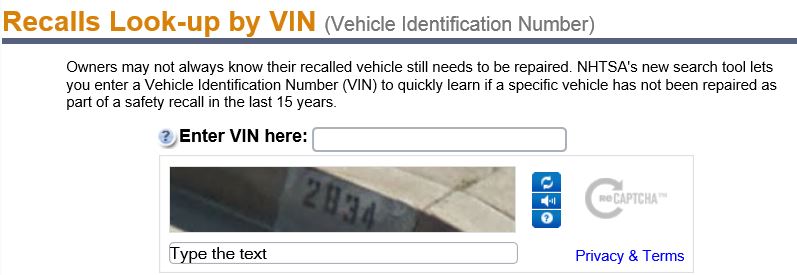
 The US DOT on the 20th of Aug mandated that all major manufactures now list all the VIN numbers of vehicles affected by recalls. And you can check that list at the Safercar.gov website. Well not quite all manufactures yet, but the stragglers are coming around.
What is the mandate, all major light vehicle and motorcycle manufacturers are required to provide VIN search capability for uncompleted recalls on their own websites. This data must be updated at least weekly.
NHTSA’s new VIN look-up tool directly relies on information from all major automakers.
Determining whether there is a recall that consumers need to take action on is easy. After entering the VIN number into the field, results will appear if the consumer has an open recall on their vehicle, and if there are none, owners will see “No Open Recalls.”
If this works as advertised it will be, in my view, the second website that the government has gotten right. The first being the American Byways site that I wrote about here.


 I JUST WANT 2 RIDE!!